CBS
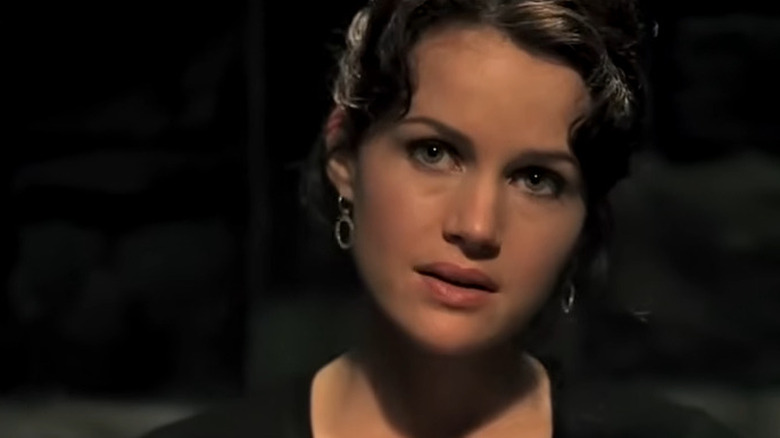
Bragi F. Schut’s sci-fi series “Threshold” was a short-lived, barely seen sci-fi TV series that ran from September to November of 2005. It only ran for nine episodes in the United States, with its final four coming out on CTV in Canada. It’s a pity it didn’t last very long, as it seemingly had everything going for it. First and foremost, “Threshold” has an excellent cast. The lead character is a government crisis manager named Dr. Molly Caffrey, played by Carla Gugino. Caffrey assembles a crack team of super-geniuses with the intention of investigating a series of mysterious goings-on involving UFOs.
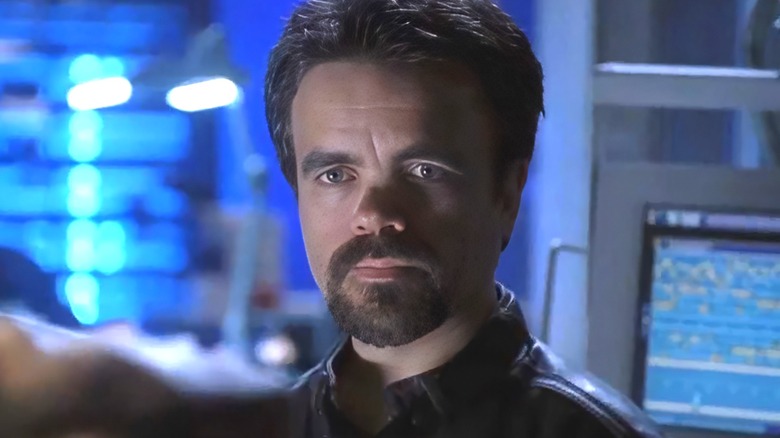
The crack team — nicknamed Red Team — includes Arthur Ramsey (Peter Dinklage), a brilliant mathematician and linguist who is very much into wine, women, and song. (This was six years before “Game of Thrones,” where Dinklage’s Tyrion Lannister shared several of the same interests.) Brent Spiner (who played Data and many other characters on “Star Trek: The Next Generation”) plays Dr. Nigel Fenway, a NASA microbiologist. The amazing Charles S. Dutton plays Red Team’s governmental go-between. The team’s aerospace engineer, Lucas, is played by Rob Benedict from “Felicity” and “Supernatural.” Brian Van Holt plays Sean, the lunk-headed tough guy of the group. Near the end of the season, the Team is also joined (at least in one episode) by a character named Daphne, played by “JAG” actress Catherine Bell. It sure seems that Bell was meant to be a regular on the show going forward.
Behind the cameras, “Threshold” was equally impressive. Brannon Braga, a longtime “Star Trek” writer, served as an executive producer, as did David S. Goyer, the screenwriter behind many of your favorite superhero movies. Goyer would go on to create “Foundation,” and as our interview with him proves, that man knows his sci-fi.
Threshold is like The X-Files meets Lost
CBS
Why was “Threshold” canceled so quickly? We’ll get to that. Although it certainly wasn’t because it had a bad premise.
The pilot episode of “Threshold” involved Dr. Caffrey assembling the Red Team and trekking out to a Navy cargo freighter that’s encountered a crashed UFO out in the ocean. She finds that humans are being infected by a mysterious alien virus that can be spread through audio signals, and also in the usual fashion of exchanging fluids. This alien virus will be the backbone of “Threshold,” which spends a lot of screen time investigating the virus’ effects.
For instance, some of the infected people are turned into, essentially, super-beings. They have increased strength and weirder DNA strands, but they also lose all their emotions and compassion. Other infected people mutate physically and become suicidal. Some people have only light exposure to the alien virus, which gives them the ability to hear alien thoughts. Very occasionally, a human is infected and gets all of the superpowers of the virus, but retain their compassion.
Although bound together by the virus story arc, “Threshold” was still presented largely as a “case-of-the-week” series. One episode, for instance, was about how the alien audio signal somehow made its way to Miami on a mix tape. Another takes the action to Baltimore, where one of the infected might be committing murders.
“Threshold” came out when a lot of TV was transitioning from a weekly, syndication-friendly episodic structure to a long-form, “Lost”-like serialized structure. Exec producer David S. Goyer once gave an interview to Bullz-eye.com and theorized that CBS wasn’t comfortable with serialization, which he felt was the main reason it was pushed from the airwaves.
Threshold had big plans for the future
CBS
“Threshold” eventually reveals that the alien virus was an extraterrestrial plot to … well, I won’t give away all the secrets, other than to say the alien plot has something to do with a deep-space cataclysm whose effects are scheduled to strike Earth in six years. Had “Threshold” been successful enough to last for six seasons, we would have no doubt seen the effects of that cataclysm up close.
“Threshold” also had big plans for the future. According to the special features on the show’s DVD release, the series would have actually changed its title over the years. “Threshold” was only the name of Dr. Caffrey’s UFO contingency plan. Season 2 would have been called “Foothold,” while the third season would have been called, evocatively, “Stranglehold.”
I mentioned at the top of this article that Peter Dinklage’s character, Arthur Ramsey, was fond of wine, women, and song. Evidently, his fondness for alcohol was going to be revealed to be full-blown alcoholism.
Reviews for “Threshold” were mixed, with the series earning a 47% approval rating on Rotten Tomatoes, based on a mere 17 reviews. Writing for EW, Gillian Flynn — yes, the same Gillian Flynn who eventually wrote “Gone Girl” and adapted her novel for director David Fincher’s excellent movie — gave the series a C+, saying that it never went very deep with its paranoia or post-9/11 analysis. “‘Threshold’ is neither analytic nor satiric,” she wrote. “The infected are detained like suspected terrorists, all rights suspended, but the imagery never goes far.” Her main complaint was that “Threshold” wasn’t creepy enough.
The series isn’t on streaming, but it’s worth looking for. Resourceful internet sleuths should be able to find it.

Upgrade Your Movie Nights with Fire TV Stick 4K Plus
Stream movies, shows and entertainment in 4K with an easy upgrade for your TV.
View on Amazon