
Potsy Ponciroli’s “Motor City” is a 1970s-set action movie with, according to the production notes, only five lines of dialogue, tops.
You read that right: there’s sound and music but hardly a single word is ever uttered by anyone onscreen.
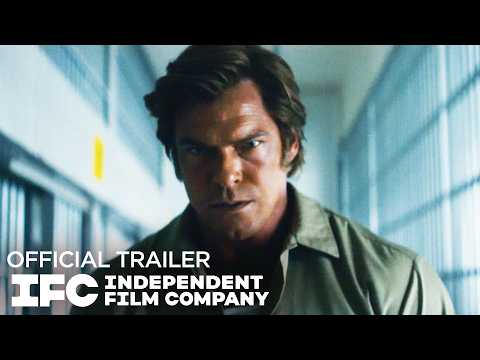
The idea is to make this more richly cinematic and, sometimes, the gimmick pays off, particularly when the bullets and car smash-ups dominate. However, when scenes emerge where helpful exposition is replaced by brooding silence, the drawbacks of this approach become clear.
By applying the same method as John Woo’s “Silent Night” (2023), it has similar advantages and limitations. While the action sequences for both films are thrilling and devoid of forced, tough-guy speeches, the scenes where character-building dialogue ought to be are, instead, presented as two actors sitting across from one another, not saying anything.
The soundtrack supplies what little context we’re supposed to be absorbing.
I’m intrigued that action movie master Woo and up-and-coming Ponciroli have attempted such an ambitious and offbeat experiment. These two films, as accomplished as they are, demonstrate why dialogue is such a pivotal component to the best crime thrillers, those made in the 1970s and otherwise.
Alan Ritchson stars as Johnny, a factory worker who falls for a waitress named Sophia (Shailene Woodley). Reynolds, a deranged crime boss (Ben Foster) frames Johnny (who is sent away to prison for a decades-long sentence) and steals away Sophia, who becomes his tainted arm candy.
While Johnny rots away in prison, Reynolds taunts him by sending cruel letters with tell-tale pictures, which is all the motivation Johnny needs to bust out and break every bone in Reynolds’ body.
“Motor City” does a decent job of sticking to the no-dialogue rule, though this is the kind of film where a newspaper heading does a lot of heavy lifting.
Had the plot been a simple Good Guy vs Bad Guy battle, it might have gone down easier, but this is a complex story with a wrongfully imprisoned hero and a truly vile antagonist who relishes all the drugs and the power he ingests. Most of the action is in the prologue and grand finale- after a preview of the final confrontation, the focus reverses to the drawn-out first act, setting up a long-winded tale that could have benefitted from a lot more chatter.
It’s strange, complaining that “Motor City” needed more talking, since the movie mostly works. However, it brings to mind the film’s current box office competitor, Christopher Nolan’s “The Odyssey,” which is currently the biggest movie in the world.
Both films are richly cinematic and use the tools of cinema storytelling exceptionally well, but Nolan’s movie, with its clunky, intentionally contemporary (and, let’s face it, dumbed down) dialogue, is the film’s true Achilles’ Heel and not the ample running time.
Had Nolan gone the “Motor City” route and either cut down or eliminated all the dialogue altogether, the film would have been even richer as a prime example of Pure Cinema, instead of the compelling but flawed work it is.
Anyway, back to “Motor City.”
Ritchson excels in a role that, stripped of almost no words, suits his formidable presence. If anyone gave me the kind of glowering looks Ritchson gives Foster, I’d assume my days were numbered.
View this post on Instagram
Despite the verbal limitations of their roles, Foster and especially Woodley give intense performances that somehow manage to demonstrate how good they are, even in a film that demands them to express nuance in facial expression but mostly wants them to come across as characters not out of place in “Scarface” (1983).
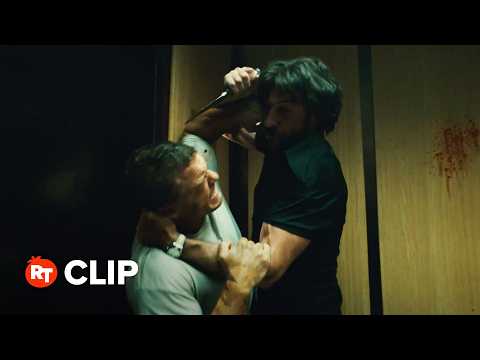
Once the third act kicks in and the action and carnage dominate, the film becomes a tour de force in creating a steadily rising body count. There’s a fight scene in an elevator between two men, involving the use of guns, knives and brute strength, that is, along with the one in “Die Hard With a Vengeance” (1995), the best I’ve ever seen.
The look of “Motor City” impresses, as both a period piece and film noir, as does the soundtrack, which, in addition to the likes of Fleetwood Mac and The Moody Blues, utilizes some lesser-known cuts. I appreciated how Ponciroli opens the film with a different version of David Bowie’s “Putting Out the Fire” than the one heard in “Cat People” (1982) and “Inglourious Basterds” (2009).
Despite emerging as a minor summer attraction, in the midst of Odysseus, Maui the demigod and the gang from “Toy Story,” “Motor City” is absolutely worth seeing on the biggest screen possible. Just don’t expect the rule of No Talking, both on and off the screen, to be consistent or the best creative choice.
Admittedly, there were plot details that became much clearer when reading the film’s Wikipedia synopsis. It seems that the no-speaking-just-action approach to this genre is still a work in progress.
Two and a half stars (out of four)
The post ‘Motor City’ – Silent Action Romp Delivers Big Thrills, Mixed Results appeared first on Hollywood in Toto.