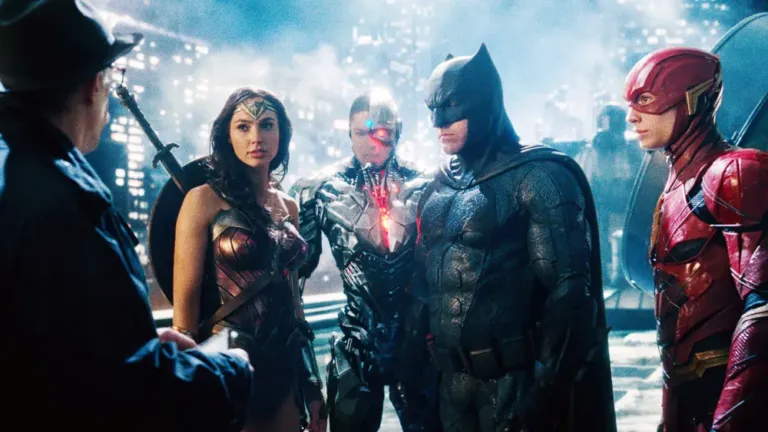
For several years, I have had an increasingly uncomfortable feeling about Western television: the kind of stories I most wanted to watch seem to be disappearing.
I am not simply looking for “clean” entertainment. I want good writing, strong acting and emotional depth. But I also want stories in which family, marriage, fatherhood and motherhood, friendship, responsibility, sacrifice, forgiveness and redemption are treated seriously rather than as relics from another age.
My reference points explain what I mean.

“Friday Night Lights” remains one of my favorite Western TV shows: a story about marriage, parenthood, community and the moral weight of adult responsibility. “Shtisel” treats faith, family and generations with extraordinary humanity.
“Derek” finds dignity in fragile and ordinary lives. And above all there is the Korean drama “My Mister,” which I consider the most extraordinary work of art I have ever encountered.
So I gave ChatGPT a challenge: prove my impression wrong.
At first, the premise seemed simple. Surely, I had just lost touch with recent Western television. Surely, if we searched long enough, ChatGPT could produce a substantial list of recent series that combined artistic quality with the values I was describing.
It could not.
There were partial successes and exceptions, but surprisingly few convincing answers. And I was not even asking only for another “My Mister” or “Friday Night Lights.” I would have happily accepted the Western equivalent of “Business Proposal” or “King the Land”: a polished, light romantic comedy in which a man and a woman meet, court each other and fall in love, and in which that love story is simply allowed to be the center of the narrative.

Even that proved strangely difficult.
The search gradually became a discussion about a much bigger question: what has happened to Western popular storytelling over the last 15 or 20 years?
My own answer is that the cultural center of gravity has shifted. Marriage, children, distinct male and female roles and romantic love between men and women no longer occupy the natural place they once did in popular entertainment.
In their place I see far more antiheroes, family breakdown, infidelity, sex detached from love or procreation, and stories in which traditional masculinity, femininity, motherhood or fatherhood are often treated with suspicion.
I do not object to strong female characters. Some of the strongest women I have seen on television are Asian characters: Soo-jin in “Mother,” He Xingfu in “The Story of Xing Fu,” An Zhi Que in “Angels Fall Sometimes” and Lee Ji-an in “My Mister.”
What I admire is precisely that their strength does not require contempt for men, rejection of motherhood or hostility toward family.
The contrast with Asian television became impossible for me to ignore. Even officially atheist, communist China still produces popular stories in which family, responsibility toward parents, heterosexual courtship and fidelity remain culturally legible and emotionally central.
South Korean dramas go further still. Shows such as “Strong Woman Do Bong-soon,” “What’s Wrong with Secretary Kim,” “Business Proposal” and “King the Land” preserve a romantic grammar that feels increasingly rare in Western television.
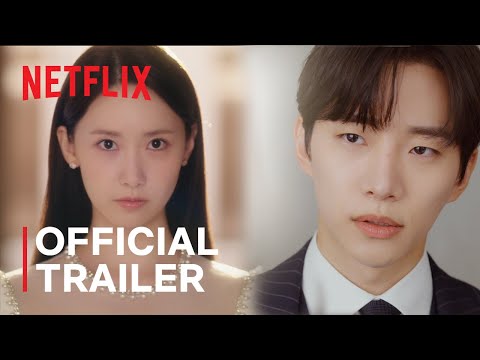
That does not mean Asian entertainment is morally perfect, nor that every K-drama reflects traditional values. In fact, I worry about the growing influence of global streaming platforms on Korean production. But the contrast remains striking.
It is visible outside fiction too. Consider OnlyFans. I see its mainstream success as part of a broader normalization of sexual commodification: something that would once have been treated as prostitution or pornography is now integrated into celebrity and online culture.
To me, this is not an isolated phenomenon. It belongs to the same cultural movement that has progressively separated sex from marriage, fidelity and procreation.
My Christian interpretation goes further than ChatGPT’s. I do not believe all these changes are simply spontaneous. I suspect that powerful cultural institutions and elites deliberately promote many of them, and within my religious worldview I also understand the direction of this transformation in spiritual terms, as part of the influence of Evil.
Here ChatGPT and I disagree.
It accepts that institutions, media companies, platforms and activist movements can intentionally promote cultural change. It also accepts that the Western cultural landscape has changed dramatically. But it does not regard those facts as proof of a single coordinated elite or of the satanic interpretation I draw from my Christian faith.
That disagreement became one of the most interesting results of our conversation.
At the beginning, ChatGPT was skeptical even of my descriptive premise. It expected that a sufficiently broad search would uncover many recent Western series compatible with what I wanted. After days of searching, that confidence weakened.
We found “The Baxters,” “Trying,” “The Last Days of Ptolemy Grey,” “The Kominsky Method” and others. But often there was a tradeoff: a series might share many of my values but lack artistic quality, or it might be artistically strong while embracing a very different moral framework.
“The Baxters” is a perfect example.

I am watching it because ChatGPT recommended it during this search. Its Christian and family-centered content is remarkably close to what I wanted. Its writing and acting, however, are nowhere near the level of “Friday Night Lights” or “Shtisel.”
So the practical result remains surprisingly simple.
After spending considerable time searching and steadily widening the field, ChatGPT found very few recent Western works that genuinely combined artistic quality, human depth and the values I had described.
We still disagree about why this has happened. But we no longer disagree that something has changed.
Antonio Benedetto is an Italian writer interested in film, television, and the moral questions shaping contemporary culture. Drawing on a Christian worldview and a deep appreciation for Korean and Chinese storytelling, he explores how popular entertainment reflects changing ideas about family, love, and human responsibility.
The post How One Christian TV Watcher Tripped Up ChatGPT appeared first on Hollywood in Toto.

Upgrade Your Movie Nights with Fire TV Stick 4K Plus
Stream movies, shows and entertainment in 4K with an easy upgrade for your TV.
View on Amazon