
I get asked a lot if I ever change my mind about movies. Is there a movie I once loved or hated but now have a different opinion about?
For the most part, the answer is no. My opinions usually remain stubbornly intact. Also, movies I’ve liked have become movies that I now love, after revisiting and taking in what it still has to tell me (this is what retrospective writing assignments have offered me).
I’ve also looked at works by, for example, Jean-Luc Godard and Stanley Kubrick with a fresh set of eyes and a deeper understanding of the themes those filmmakers typically explore.
Yet, I have no drastic, 360-degree turn, I-hated-it-then-I-love-it-now testimonial of a movie I completely changed my mind about and will admit I was wrong on the first view. No movie has ever made me radically reconsider its value and caused me to admit I was wrong.
Well…okay…there was just one, and it was Ridley Scott’s “Hannibal” (2001).
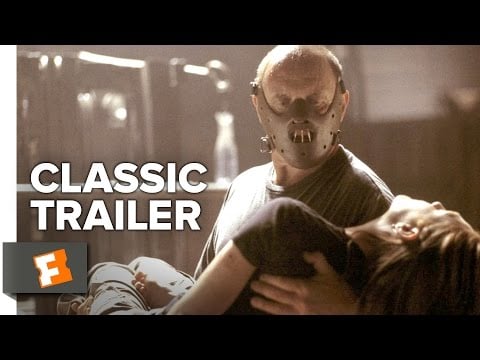
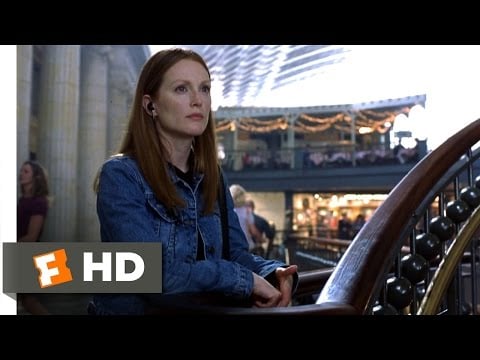
Julianne Moore stars and now plays the role of Clarice Starling, who is demoted after an FBI raid becomes a tragic shoot-out. Her fame at stopping “The Tooth Fairy” far behind her, Starling becomes obsessed with capturing Dr. Hannibal Lecter (Sir Anthony Hopkins), who has been missing for years.
One of Lecter’s former victims, the hideously scarred and dangerously wealthy Mason Verger (an unrecognizable Gary Oldman, in an extraordinary turn), is also on the hunt for Lecter and plans to trap and torture him. Once we see where Lecter has been all this time, it’s not a surprise to discover he’s in the academic world, surrounding himself in rich culture.
On the other hand, he can barely contain his glee in belatedly taking up self-destructive behavior, such as murdering a professional rival. Also, he’s developed a perverse infatuation for Starling.
When it premiered in early 2001, “Hannibal” made a massive splash and became the first gotta-see-it blockbuster of its year. It opened to summer movie-sized numbers, which was unheard of in February, and played well into the year.
It also divided everyone, with critics and audiences split on the film’s merits. I was among those who didn’t like it. It was the last film I reviewed for my college paper, where I gave it a D+ and declared, “there hasn’t been an overproduced sequel this slick, empty and hollow since ‘Beverly Hills Cop II.’”
A decade later, I taught a college course on the films of Scott, revisited “Hannibal” and discovered my original assessment was wrong. Indeed, it’s gross but this is a Gaston Leroux-infused gothic love story, about a pure soul (Starling), living in a world of devils.
Despite having read the Thomas Harris novel of the same name and loved it, I was initially not on board with Scott’s sequel to “The Silence of the Lambs” (1991). It took me ten years to revisit it and find I had a completely different experience than the first time.
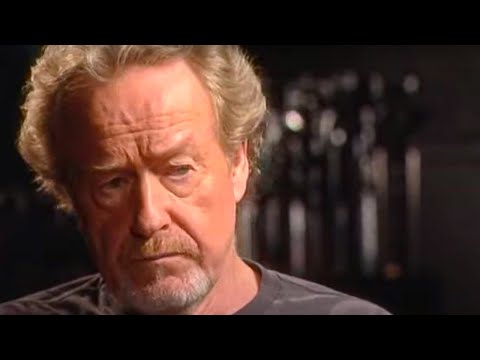
“Hannibal” opened in theaters a decade later (almost to the day) after the release of Jonathan Demme’s Best Picture winning, highly influential 1991 blockbuster. Much had been written about its original team of Demme and Oscar-winners Jodie Foster and Hopkins being pared down to only the latter.
The news of the acclaimed Moore taking up the role of Agent Clarice Starling over Foster went down easier than expected, as did word that the new director was Scott, coming off the massive success of “Gladiator” (2000).
Hopkins was in the midst of a rich second (or is it third?) act of his career, enjoying enormous success and acclaim. Since winning the Oscar for playing the vile but elegant Dr. Hannibal “The Cannibal” Lecter, Hopkins had a slew of hits and went from being a notable performer to a bona fide mega movie star.
Returning to the role of Lecter made every cinephile wet their lips, though the film itself was startling and not what anyone anticipated.
“Hannibal” is mostly faithful to the 1999 Thomas Harris bestseller it’s based on and, in terms of story, is a sequel that connects narrative and character threads from Demme’s film. Yet, the style and approach couldn’t be more different.
Whereas Demme held back from showing the most macabre details and kept his film tightly paced, Scott goes in the other direction. “Hannibal” takes it time to establish mood, develop its characters and allow the atmosphere and lurid details to draw us in.
Also, on several occasions, it’s really disgusting.
RELATED: HOW ‘SILENCE OF THE LAMBS’ SHATTERED HORROR MOLD
Starling embodies righteousness and Moore exemplifies this. Although hers is a supporting turn, Moore’s understated performance complements Foster’s original portrayal without surpassing it.
The brilliance in “Hannibal” is evident from the very start. The film begins in darkness (we hear dialog transpiring but see nothing). A keyhole appears from the corner of the screen and grows bigger until we see a vast room inhabited by three people discussing Lecter.
The keyhole effect clues us in that we’re seeing something we shouldn’t be seeing. This is confirmed by the film’s first close up, of Verger’s hideous mug, the last person we’d want to get close to.
From the dialog, we quickly realize how wicked Verger is and how wrong this meeting taking place is. Scott is warning us: this is as civilized as the movie gets.
Both the opening credits and dozens of scenes afterward convey a world under constant surveillance, making this just barely pre-9/11 thriller ahead of its time. There are lots of moments to savor, though the now-legendary climactic dinner scene bears mentioning.
Next to the chest burster sequence in “Alien,” it’s among the hardest to watch scenes in a Scott film.
Hopkins is superb from start to finish (and indeed scary as Lecter in broad daylight), while Moore and a very game Ray Liotta are also first rate. Many forget how good Giancarlo Giannini is and how his Inspector Pazzi is crucial to the film’s first act.
Oldman’s work is one for the books, as he makes Verger a predator even more foul on the inside than the exterior.
There are eerie echoes of the original film, such as the way Starling is seen spending her days in the FBI basement. It’s as though she were now the prisoner of Lecter, stuck in her own cell. She needs to come out of hiding as much as he does.
Meanwhile, Lecter’s conversations with everyone he meets always seem to echo his “quid pro quo” approach as a prisoner. He’s always looking for another victim to “mentor,” a quality that makes the final scene on an airplane so disturbing.
I hated the fade out the first time I saw it. Now, it feels appropriate. Considering how Lecter’s last moment with Starling is, in a vastly twisted way, romanticized and heroic, the bit on the plane is a proper contrast.
Lecter is truly a monster, and Scott wisely leaves us gasping, if not gagging.
The post Critic Mea Culpa: What We Missed About ‘Hannibal’ appeared first on Hollywood in Toto.