

Epic Pictures Group
Science fiction is one of the most enduring genres in all of cinema, and for good reason. It’s a flexible genre that can be many things. Indeed, sci-fi runs the gamut from some of the most expensive movies of all time, like James Cameron’s mega-budget sequel “Avatar: Fire and Ash,” to films such as “Primer,” which was made for practically nothing but went a long way thanks to its inventive premise.
“Primer” isn’t alone, either. There are plenty of other low-budget sci-fi movies that have made millions, including “Mad Max” and “Chronicle.” Much like horror, sci-fi is a genre with a rabid fanbase that will turn up for something that scratches a certain itch. Unlike horror, though, it often requires more than blood and sharp objects, as good sci-fi needs to be convincing and, as such, comes with certain expectations from the audience. In other words, lower-budget sci-fi can be tough to pull off … but it’s certainly not impossible.
The movies we’re going to talk about today are proof positive of that. Specifically, we’re going to run through five different films from across the spectrum of science fiction that look far more expensive than they actually are. From gritty monster movies to alien mysteries, the filmmakers behind these titles proved that you can do a whole lot with relatively little. Let’s get into it.
Monsters

Vertigo Films
Gareth Edwards is known for delivering sci-fi movies on the largest scale imaginable, having paved the way for the expanded MonsterVerse with his divisive 2014 box office hit “Godzilla.” Certainly, there’s no denying that the man knows his way around a visual spectacle, and that was true from the very beginning of his career as a director, dating back to the far more humble “Monsters.”
Released in 2010, “Monsters” delivers a fully realized world filled with huge, fantastical creatures, yet it cost a tiny fraction of what Edwards’ “Godzilla” did. The film takes place six years after the crash of a NASA space probe in a large area between Mexico and the United States. With the region now under quarantine as military forces wage a losing battle against the giant extraterrestrials residing there, a photojournalist (Scoot McNairy) is forced to get close to the action when he escorts his boss’ daughter (Whitney Able) through the zone from Central America to the U.S. border.
Edwards shot “Monsters” on an incredibly low budget that’s said to be around $500,000. You’d never know it while watching the movie, however, as it has ridiculously impressive production values. The director took a “better to ask for forgiveness than permission” indie style approach to his filmmaking, which gives the flick a far sharper look than most anything else at this budget level. His background as a visual effects specialist similarly came into play where it concerns the “monsters” themselves, as Edwards put a painstaking number of hours into making sure they looked like the real deal.
The end result is a surprisingly human yet large-feeling science fiction-based portrait of war. Viewers would truly never guess that it was made for way less than $1 million.
Primitive War

Sparke Films
Dinosaur movies aren’t really cheap to make, unless we’re talking about a Syfy original feature or some Walmart DVD bargain bin find. And, with all due respect, those sorts of films generally look as cheap as they are. That’s what makes 2025’s “Primitive War” so remarkable. Director Luke Sparke’s dinosaur movie was produced on a shockingly low budget, yet it has a genuine blockbuster feel, offering more than two hours’ worth of wild dino-centric action. Made for well under $10 million, it’s pretty unbelievable what Sparke was able to accomplish.
Based on the novel of the same name by Ethan Pettus, “Primitive War” takes place during the Vietnam War and centers on a recon unit as they venture to an isolated jungle valley to uncover the fate of a missing platoon. Once there, they soon find themselves in a fight for their lives against an unexpected enemy: prehistoric dinosaurs.
“Primitive War” was rejected by Hollywood, but Sparke decided to make it anyway. The result is something devoid of compromises, totally outlandish, and not at all representing the financial constraints it was made under. I can’t say that the film’s acting is going to win any awards, but for those who want dinosaur mayhem that is everything the “Jurassic” franchise can never be, this is it. Once it gets going, it never lets up, serving up tons of different dinos, lots of blood, and truly exciting action set pieces.
True to the mission of this list, this is a movie that looks far, far more expensive than it is in reality. For anyone who knows anything about films and what they generally cost to produce, “Primitive War” is a jaw-dropping accomplishment.
Psycho Goreman

RLJE Films
Steven Kostanski has made a name for himself as a filmmaker operating in a very specific lane. He co-directed 2016’s great ’80s horror movie throwback “The Void” and specializes in films that feature lots of practical effects, rubber monsters, and goop that includes, but isn’t limited to, blood. But for many, his crowning achievement is 2020’s “Psycho Goreman,” a.k.a. “PG: Psycho Goreman.” It scratches a very particular itch for a very particular sort of sci-fi fan.
“Psycho Goreman” follows siblings Mimi (Nita-Josee Hanna) and Luke (Owen Myre) as they unwittingly resurrect an ancient alien overlord who was entombed on Earth millions of years ago following a failed attempt to destroy the universe. Now under their control, they nickname the evil creature Psycho Goreman (Matthew Ninaber) or PG for short, using the magical amulet they discovered to force him to obey their childish whims. The result is gonzo sci-fi horror/comedy at its finest.
The caliber of production design that Kostanski crams into “Psycho Goreman” is absurd, from the film’s heavily detailed costumes to its delightful non-digital trickery. It gives the movie a tangible quality that is too often missing from bloated sci-fi blockbusters that lean way too heavily on CGI when, more often than not, some latex and fluids would work better. Unsurprisingly, Kostanski also had a hand in crafting the brutal kills of “In a Violent Nature,” further demonstrating his expertise in this area.
With an estimated budget of less than $1 million, Kostanski made something that looks like it cost at least 20 times that with “Psycho Goreman.” Every dollar is stretched to its limit and put to extremely good use.
Turbo Kid
Epic Pictures Group
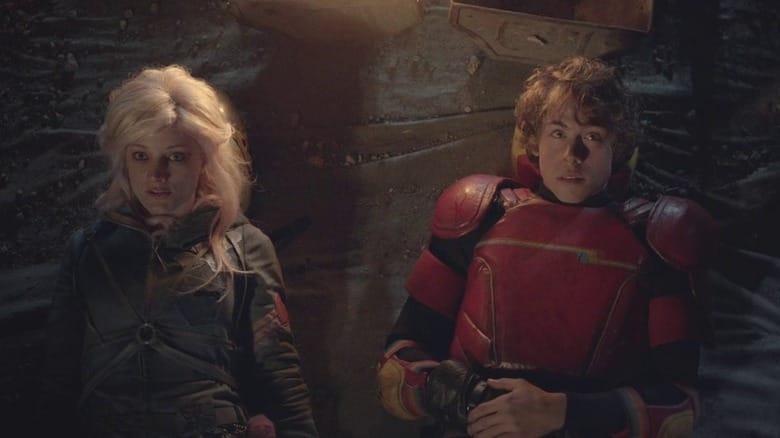
Harkoning back to an era when sci-fi movies of a certain ilk were made very specifically for kids, 2015’s “Turbo Kid” is an inspiredly strange post-apocalyptic adventure. It’s nostalgia done right and represents a very post-modern take on this type of entertainment. It’s also packing more imagination and visual delights than many, many other far more expensive Hollywood movies that are cut from a similar cloth. This one did it better and miraculously cheaper.
Taking place in a post-apocalyptic alternate version of 1997, “Turbo Kid” centers on The Kid (Munro Chambers), an orphan who survives on his own in what’s known as the Wasteland on his BMX. But when his chipper, pink-haired new best friend Apple (Laurence Leboeuf) is kidnapped by a minion of the evil overlord Zeus (Michael Ironside), The Kid adopts the courage of a comic book hero to take on Zeus and his army.
Directed by François Simard, Anouk Whissell, and Yoann-Karl Whissell, “Turbo Kid” is nothing shy of a miracle in the way it stretches its budget to its absolute limits. Armed with roughly $60,000, the trio manage to fully realize a comic book-y, “Mad Max”-esque sci-fi landscape that’s rich with interesting characters and compelling imagery.
The costumes kick ass. The tone is expertly balanced. It, all at once, feels like a nostalgic trip, yet nothing else feels exactly like it. And the fact that it was produced for far, far less than the average cost of an episode of modern television is downright bewildering. That any movie ever gets made at all is a miracle. “Turbo Kid” is a miracle amongst miracles.
The Vast of Night

GED Cinema
There are times when we marvel at a movie for being relatively low-budget — say, under $10 million. Filmmaking isn’t a cheap art form, after all. Then there are moments where a director pulls something off that defies all traditional Hollywood logic. That’s precisely what Andrew Patterson did with 2020’s “The Vast of Night.” A high-concept, low-tech, brilliantly executed alien story, one would never, ever guess he made it for less than $1 million. But he did, and it didn’t suffer one bit from a lack of financial resources.
Patterson’s movie takes place in the 1950s at the dawn of the space-race and centers on two radio-obsessed teens who discover a strange frequency over the airwaves. Little do they know, this will soon become the most important night of their lives and in the history of their small town.
“The Vast of Night” is a great example of how to make mesmerizing sci-fi on a budget. Yes, this genre can lend itself to big, expensive spectacle, but the best science fiction movies are more about making the viewer think while getting wrapped up in a story. And the mystery at the heart of this film, which unfolds at a time long before any of our current technology even existed, pulls viewers in and doesn’t let go.
This film is ingenious, eerie, and relentlessly compelling. It’s character driven, yet, despite its relative lack of spectacle, it never feels too small. Its ambition never exceeds its grasp, either, which is downright shocking given its cost. Unsuspecting folks probably wouldn’t mistake this for a terribly expensive movie, but they’d also never guess it was made for the Hollywood equivalent of change in the couch cushions, either.

Upgrade Your Movie Nights with Fire TV Stick 4K Plus
Stream movies, shows and entertainment in 4K with an easy upgrade for your TV.
View on Amazon