Warner Bros.
As important as box office returns are, the history of cinema has surely taught us they’re far from a reliable gauge of a film’s quality. Plenty of movies have become beloved after bombing at the box office, and that’s no different with Westerns.
The genre without which the movie industry simply wouldn’t be what it is today has delivered innumerable classics, as well as countless overlooked gems that deserve much more recognition than they receive even today. Take “The Fastest Gun Alive,” a forgotten Western starring Leif Erickson and a rarely discussed silver screen legend in Glenn Ford. Or how about the bleak 1950s Western that featured “Gilligan’s Island” star Tina Louise, “Day of the Outlaw,” which remains a must-watch for fans of the genre to this day.
Then, there are those prairie sagas that came to define the genre to which they belonged, but nevertheless absolutely tanked at the box office. By dint of the sheer amount of Westerns Hollywood produced over the years, the genre is full of indisputable classics that failed to make much money upon their initial release. Luckily, we’ve rounded up five of them and listed them here, if only to serve as another reminder of how box office returns rarely tell the whole story.
Once Upon a Time in the West (1968)
Paramount Pictures
Despite the fact Sergio Leone rewrote filmmaking rules with his “Dollars” trilogy, the Italian director initially struggled to establish himself in the United States. His first Clint Eastwood collaboration, “A Fistful of Dollars,” for instance, ultimately became successful Stateside, but critics were hardly won over at first. Similarly, when he released his first post-“Dollars” trilogy project, “Once Upon a Time in the West,” the film struggled to make much of an impact on the American box office.
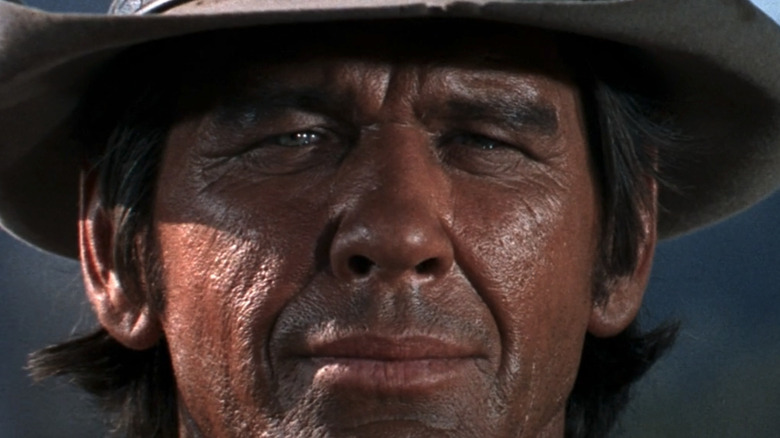
“Once Upon a Time in the West” sees Gabriele Ferzetti’s rail baron, Morton, dispatch a merciless henchman named Frank (Henry Fonda) to secure the land surrounding the town of Flagstone. Frank kills the landowner, McBain (Frank Wolff) and blames Jason Robards’ bandit, Cheyenne. Meanwhile, Charles Bronson’s enigmatic gunslinger “Harmonica” arrives in town propelled by an equally mysterious vendetta.
“Once Upon a Time in the West” was a twist on the genre’s greatest hits, paying homage to numerous classic Westerns while simultaneously forging a new path. But American audiences didn’t seem to catch much of that upon the film’s debut. “Once Upon a Time in the West” had its Italian premiere in 1968 ahead of a U.S. release in 1969. When all was said and done, the film made $5.4 million Stateside, which paled in comparison to its European receipts. France particularly embraced Leone’s movie. Part of the discrepancy had to do with Paramount Pictures, the American distributor, cutting out almost 20 minutes of footage, which significantly altered the final product. Thankfully, “Once Upon a Time in the West” was ultimately recognized as one of the great Westerns of the 1960s, becoming hugely influential and revered in the years after its release.
The Assassination of Jesse James by the Coward Robert Ford (2007)
Warner Bros.
When we think of genre-defining Westerns we typically think of films from the mid to late 20th Century. This was, after all, the period in which the myth of the Old West was forged on-screen. Even revisionist classics of the late 1960s and 70s, such as “High Plains Drifter” or “The Wild Bunch,” could very easily make a list of genre-defining sagebrush sagas.
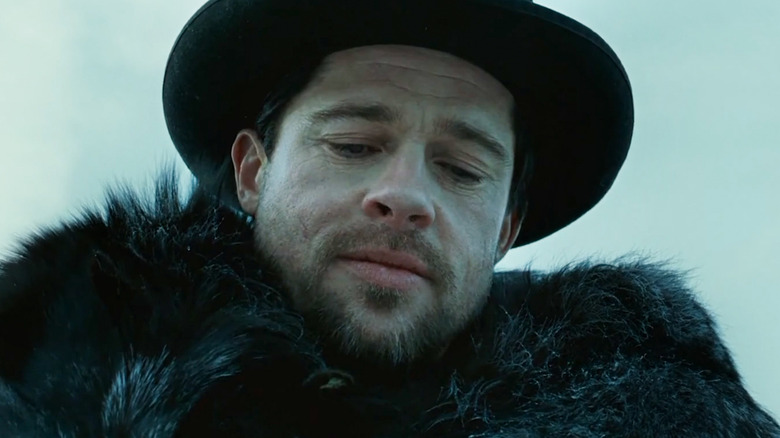
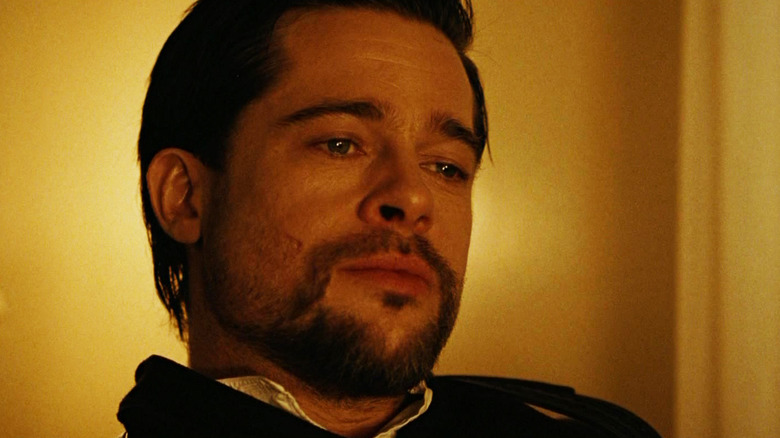
While the 21st Century has given us plenty of great Westerns, few could truly be described as having defined the genre to which they belong. Andrew Dominik’s “The Assassination of Jesse James by the Coward Robert Ford,” however, felt like the quintessential revisionist Western of the early 2000s. Its deconstruction of the titular Old West legend and the concept of hero worship more generally represented an evolution of the revisionist ethos into something even more distrusting of the myths on which the Western genre was based. Beyond being one of the most important Westerns of its era, then, this Brad Pitt flop is one of the best movies of the 2000s.
But a flop it was. It’s taken some time for the movie to gain some recognition and it arguably deserves more. That’s all thanks to Warner Bros., which back in September 2007 dumped “The Assassination of Jesse James” in five theaters after execs became disappointed in the lack of shootouts. The film, which cost $30 million to make, ended up bringing in $15.3 million worldwide and failed to make much of an impact at first, which was nothing short of a travesty for such a beautifully realized, elegiac, and ultimately genre-defining Western.
The Furies (1950)

Paramount Pictures
Anthony Mann’s “The Furies” is an absolute classic that artfully blends classic Western tropes with more thoughtful, noir-infused melodrama to create a truly unique entry in the Western canon. Walter Huston (in his final role) plays the arrogant owner of a New Mexico ranch, T.C. Jeffords, who lives on the property with his equally tenacious daughter, Vance (Barbara Stanwyck). When Vance pursues Wendell Corey’s Rip Darrow, T.C. pays him to stay away. He then further inflames matters by announcing that he intends to marry Flo Burnett (Judith Anderson), who’s only with him for his money. T.C. then evicts Vance’s friend, Juan Herrera (Gilbert Roland) and his family from the land — all of which prompts his daughter to embark on a quest to ruin her father.
It’s pretty intense stuff for a film that arrived during a period where John Wayne and his more straightforward white hat good guy routine was proving increasingly popular with audiences. Perhaps that’s why the film was considered a failure by Paramount Pictures.
“The Furies” did make $1.55 million at the US box office, and according to the January 1951 issue of Variety became the 70th highest-grossing film of 1950. Nonetheless, it seems that wasn’t quite enough for Paramount, and certainly wasn’t enough to allow “The Furies” to compete with the likes of James Stewart’s “Broken Arrow,” which finished ninth for the year with a $3.55 million box office take, becoming the highest-grossing Western of the year. Now, however, “The Furies” is rightly recognized as one of the great Westerns that should never have flopped in the first place.
The Ox-Bow Incident (1943)

20th Century Studios
One of Clint Eastwood’s three favorite Hollywood classics, “The Ox-Bow Incident” is yet another indisputably seminal Western that didn’t make much of an impact at the box office. Directed by William A. Wellman of “A Star is Born” fame, the 1943 Western was much more than your standard shoot-em-up. But it was also fairly bleak, and seemed destined to underperform from the very beginning — as evidenced by Wellman having to agree to direct two other films just to secure permission to make “The Ox-Bow Incident.”
The film is an adaption of Walter Van Tilburg Clark’s 1940 novel of the same name and stars Henry Fonda as cowboy Gil Carter, who arrives in the town of Bridger’s Wells, Nevada alongside fellow cowpoke Art Croft (Harry Morgan). There, they discover the town has been plagued by cattle rustlers, who appear to have shot rancher Larry Kinkaid. Frank Conroy’s Major Tetley then leads a posse, who eventually find three men they suspect of being the rustlers in question. After lynching the supposed criminals, however, the gang learns it has made a major mistake that leads to even more tragic consequences.
“The Ox-Bow Incident” was a fairly dark film, which might go some way to explaining why it was considered a failure by 20th Century Fox head Darryl F. Zanuck. Indeed, in his review for the New York Times, Bosley Crowther wrote, “it is hard to imagine a picture with less promise commercially.” The film earned $750,000 in the United States, with Zanuck confirming that it had failed to live up to financial expectations. “In spite of its significance and its dramatic value,” he wrote, “our records showed that it had failed to pay its way.”
The Big Trail (1930)

20th Century Studios
“The Big Trail” should have made John Wayne a star. Raoul Walsh’s 1930 widescreen epic was shot in the new “Fox Grandeur” format, and conceived as a grand celebration of the 100th anniversary of the Oregon Trail. In what was his first starring role, Wayne plays fur trapper Breck Coleman, who’s asked to scout for a group of settlers as they travel the trail. He agrees after learning that Red Flack (Tyrone Power Sr.), the man responsible for killing his friend, will also be leading a bull train along the same path. Alongside braving the elements and fending off Cheyenne attacks, Coleman also finds love with one of the settler women, Ruth Cameron (Marguerite Churchill).
“The Big Trail” really did have it all — romance, action, and impressive on-location cinematography that truly captured the scope of the epic journey on which Breck Coleman and the pioneers embarked. Unfortunately, none of that equated to box office success. “The Big Trail” was a flop, and according to JohnWayne.com this was mostly due to the fact audiences outside of Los Angeles and New York weren’t able to see the “Fox Grandeur” version of Walsh’s epic Western. Theaters outside those major markets didn’t invest in the technology required to show the film in all its 70mm glory. In fact, according to Turner Classic Movies, only two theaters in the entire United States had the ability to show the film in the Fox Grandeur format.
It’s odd to think that John Wayne’s first starring role was in a box office flop. But that’s what happened. After the film, the Duke remained relegated to B-Westerns until John Ford and his 1939 Western “Stagecoach” finally turned Wayne into a Western icon.

Upgrade Your Movie Nights with Fire TV Stick 4K Plus
Stream movies, shows and entertainment in 4K with an easy upgrade for your TV.
View on Amazon