HBO Max
We may receive a commission on purchases made from links.
Take one look at the conversation week-to-week among your TV-watching friends on social media, and you’ll be reminded of one thing: Streaming rules all. In 2026, the likes of HBO Max, Apple TV+, and Netflix are where prestige television continues to thrive. The appearance of yet another new service arriving every year and tapping you on the shoulder for another $15 a month may feel like you’re paying for cable all over again, but there’s no doubt that streaming shows rarely have to play by the antiquated rules you find on broadcast television. (No shade to you cable subscribers; we have an overall list of the best shows this year that encompasses streaming and broadcast.)
But which shows are these companies distributing that make it worth splitting your monthly subscription bill across yet another platform inundated with heaps of television? With streaming TV capitalizing on its cultural influence more confidently than ever, these shows are proving the worth of the modern entertainment infrastructure.
Let’s break down the best streaming shows of 2026 so far.
Beef (Season 2)

Netflix
Lee Sung Jin’s “Beef” spent its first season proving that a single fender-bender’s road rage could sustain 10 episodes of class fury and self-loathing. Its second season bets that the format can survive an entirely new cast, and the results have proven the potential for “Beef” to have a long life of anthology-structured stories of social satire.
Oscar Isaac and Carey Mulligan play Josh and Lindsay Martin, the general manager of an elite country club and his unraveling wife, whose marital collapse is witnessed and exploited by two lower-level employees, Charles Melton’s and Cailee Spaeny’s Austin and Ashley, an engaged Gen Z couple angling to climb the club’s ladder. Youn Yuh-jung and Song Kang-ho arrive mid-season as the club’s real power center, tipping the story from workplace satire into something closer to K-drama conspiracy, while Steven Yeun and Ali Wong, the faces of Season 1, step back into executive-producer roles.
Some fans and critics couldn’t get past how much Season 2 of “Beef” feels indebted to the wealth-and-privilege satire of “The White Lotus” (it also occasionally feels like a remake of the Best Picture-winning class thriller “Parasite”), but the game cast really helps it carve its own lane compared with that show and the events of Season 1. It was enough to justify an already-announced third season, proving that the absurdities of our dynamics between wealth brackets will likely never run out of juice to squeeze.
Hacks (Season 5)
HBO Max
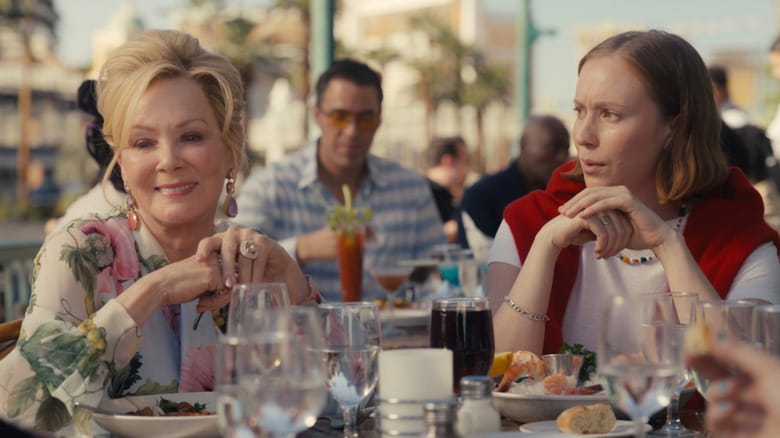
Paul W. Downs and Jen Statsky close out their five-season plan for “Hacks” with a closer built to end, and the show is sharper for having somewhere to land. It opens on a perceptive premise for a series about celebrity and legacy: After a wave of mistaken reports of her death, Deborah Vance (Jean Smart) realizes the world has quietly written her off as retired.
Smart’s Deborah and Hannah Einbinder’s Ava spend the season clawing back from that low point, chasing an EGOT, a show at Madison Square Garden, and a reboot of the sitcom that made Deborah famous, all while sparring with a network executive determined to keep her sidelined. Paul W. Downs, Megan Stalter, Carl Clemons-Hopkins, and Rose Abdoo return, joined by guest turns from Kaitlin Olson, Christopher McDonald, and newcomer Christopher Briney.
The season closed with a 100% Rotten Tomatoes score (though has since dropped to 97%), matching the show’s freshman run, and critics largely agreed it stuck the landing, even as some found the actual series finale more melodramatic than the emotionally airtight episode that preceded it. After five seasons and a dozen Emmys, “Hacks” leaves as one of its era’s most acclaimed comedies, largely because it never let the ending overwhelm the mentor-mentee friction that made it worth watching in the first place. The “Hacks” finale landed the perfect punchline.
Heated Rivarly
HBO Max
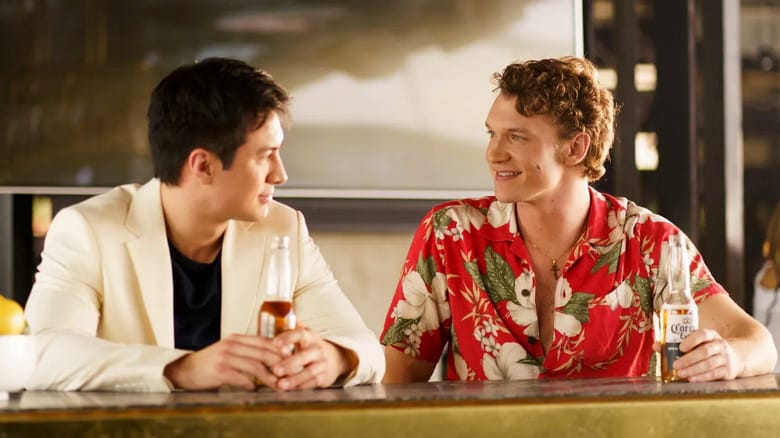
Jacob Tierney’s adaptation of Rachel Reid’s “Game Changers” novels arrived on the Canadian streamer Crave with almost no advance notice and became the kind of runaway hit streaming rarely produces anymore, a six-episode hockey romance that outdrew everything else on HBO Max the week it debuted stateside.
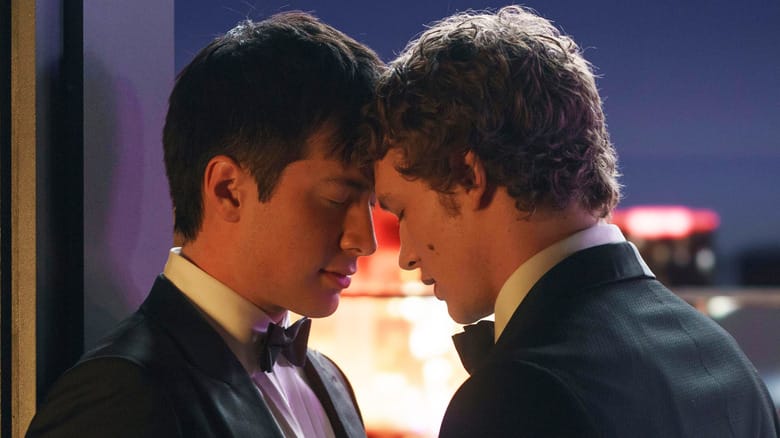
Hudson Williams and Connor Storrie play Shane Hollander and Ilya Rozanov, two rival Major League Hockey stars — a wholesome Canadian golden boy and a brooding, chain-smoking Russian “villain” — whose on-ice hatred morphs into a decade-spanning affair neither is willing to acknowledge publicly, given their sport’s macho culture. The show traces the relationship from secretive rookie hookups to something more permanent, and always steamy, with François Arnaud, Dylan Walsh, and Sophie Nélisse rounding out a supporting cast of coaches, parents, and closeted teammates.
Critics and audiences were all smitten, and its success has already reshaped the sports-romance genre it’s drawn from, sending Reid’s source novels back up the bestseller lists and setting up a second season — due in 2027 — that expands well beyond its two original leads. More than just a bona fide phenomenon, the “Heated Rivalry” fanbase has taken their love of the series to real-life causes and are actively making the world a better place. In a world that seems to get worse all the time, “Heated Rivalry” is an unexpected bastion of good.
Industry (Season 4)
HBO Max
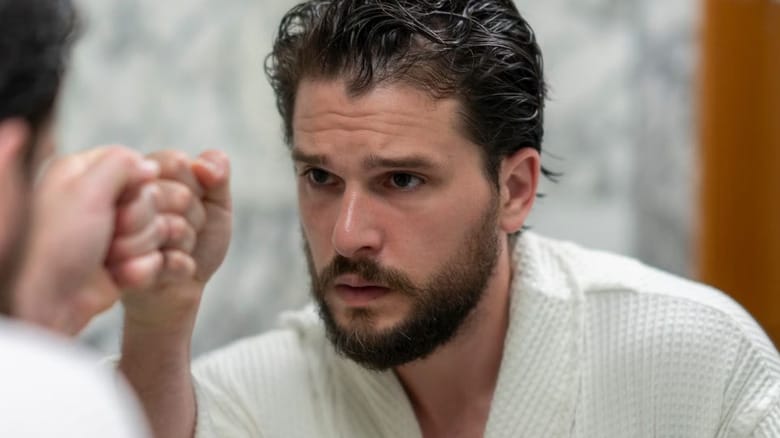
Mickey Down and Konrad Kay’s Pierpoint saga graduates its characters from the trading floor to open water, and the show evolves in turn. Season 4 follows Harper (Myha’la) and Yasmin (Marisa Abela) years after their junior-analyst days, as both circle a splashy fintech startup called Tender and its enigmatic CFO, Whitney Halberstram (Max Minghella), while Yasmin’s relationship with tech founder Sir Henry Muck (Kit Harington) blurs the line between romance and leverage.
New arrivals — Kal Penn, Kiernan Shipka, Toheeb Jimoh, Charlie Heaton — widen the cast of financiers, founders, and hangers-on circling Harper and Yasmin, while the show retains its old fixation on the specific cruelties ambitious people inflict on each other once they’ve already won.
The season debuted to rare unanimous acclaim, and HBO quickly announced a fifth and final season before Season 4 had even finished airing. Despite being shut out of the Emmys throughout its run (Abela’s BAFTA win aside), “Industry” has spent four seasons quietly becoming one of television’s most unsparing workplace dramas, and its early exit suggests Down and Kay know exactly how many more turns of the screw this story has left.
A Knight of the Seven Kingdoms

HBO Max
HBO’s second “Game of Thrones” spinoff veers sharply away from the operatic doom of “House of the Dragon,” and the gamble proves refreshing. Co-created by George R.R. Martin and showrunner Ira Parker, it adapts the first of Martin’s “Tales of Dunk and Egg” novellas, trading the Targaryen civil war for a medieval buddy story. A century before Aegon’s Conquest crumbles into ash and fire, two unlikely companions wander Westeros on considerably smaller stakes.
Peter Claffey plays Ser Duncan “Dunk” the Tall, a towering, low-born hedge knight who takes on a diminutive squire nicknamed Egg (Dexter Sol Ansell) — secretly Aegon Targaryen, a prince traveling incognito. Directed by Owen Harris and Sarah Adina Smith, the six-episode season follows the pair through a tournament gone wrong, leaning on warmth and humor rather than scale, with Bertie Carvel, Daniel Ings, and Sam Spruell rounding out the Targaryen and Baratheon knights they cross paths with.
Reviews were nearly unanimous in praising the show for its new approach to the world of “Game of Thrones.” It was renewed for a second season before its first even finished airing, with a third already planned to complete the novella trilogy, suggesting HBO has finally found the modest, character-first spinoff the franchise needed. It succeeds because it leans on “Game of Thrones'” forgotten, best element: the fun.
Paradise (Season 2)
Hulu
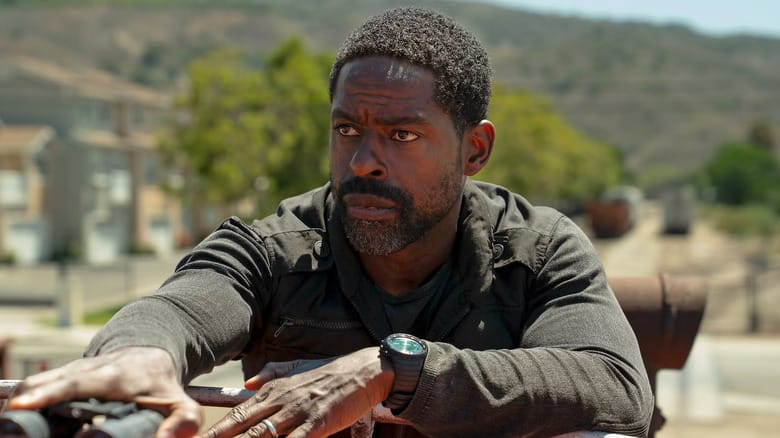
Dan Fogelman’s “Paradise” spent its first season as a mystery box — a presidential murder inside a hidden bunker — and its second season appeals because it blows that premise apart. Season 2 opens with Secret Service agent Xavier Collins crash-landing in the outside world he’d been told, for three years, no longer existed.
Sterling K. Brown returns as Collins, now searching the wreckage of that world for his wife, Dr. Teri Rogers-Collins (Enuka Okuma). Julianne Nicholson’s Sinatra remains the season’s most unsettling presence, back inside the bunker, where a leadership vacuum opens in Collins’ absence. Newcomers Shailene Woodley and Thomas Doherty — the latter as a bike-gang leader with unnerving knowledge of the bunker’s secrets — expand a world Fogelman has been building since the show’s Emmy-nominated debut.
Fogelman has called the season, only half-jokingly, his “Empire Strikes Back. It’s bleaker and more expansive, trading Season 1’s claustrophobia for open, dangerous terrain while keeping its central tease, that “it was never just about the bunker,” running underneath everything. Whether the expansion answers more than it raises is still being debated, but Brown’s performance, even in a reduced role this time, remains the show’s ballast. Even Stephen King agrees this show just keeps getting better.
The Pitt (Season 2)

HBO Max
“The Pitt” returns for a second real-time shift at Pittsburgh Trauma Medical Center, and if anything, R. Scott Gemmill’s format grows more confident under pressure. Each episode still covers a single hour of an ER shift as it happens live, but this time the chaos unfolds over the Fourth of July weekend — chosen, per star Noah Wyle, because ERs are “notoriously busy on holiday weekends” — compounded by a hospital-wide computer failure that forces the staff to go fully analog mid-surge.
Wyle returns as Dr. Michael “Robby” Robinavitch, counting down to a sabbatical he may not survive long enough to take. Patrick Ball’s Dr. Langdon returns from rehab to face Robby directly, Katherine LaNasa’s Nurse Dana anchors an unflinching episode built around a rape kit, and Sepideh Moafi joins as Dr. Al-Hashimi, a new attending whose arrival threatens to upend the department well before Robby’s ready to leave it.
Season 2 arrives to reviews as strong as the Emmy-sweeping first, as well as under a shadow: the estate of Michael Crichton, who wrote the pilot that became ER, is suing Warner Bros., John Wells, Wyle, and Gemmill, alleging “The Pitt” is an unlicensed ER revival assembled after reboot talks collapsed — a dispute the show’s creators reject, even as the series plainly descends from that same real-time, unglamorous tradition of medical-crisis television. But that’s not stopping “The Pitt,” as the trailer for season 3 is already available to watch.
Spider-Noir
Amazon Prime Video
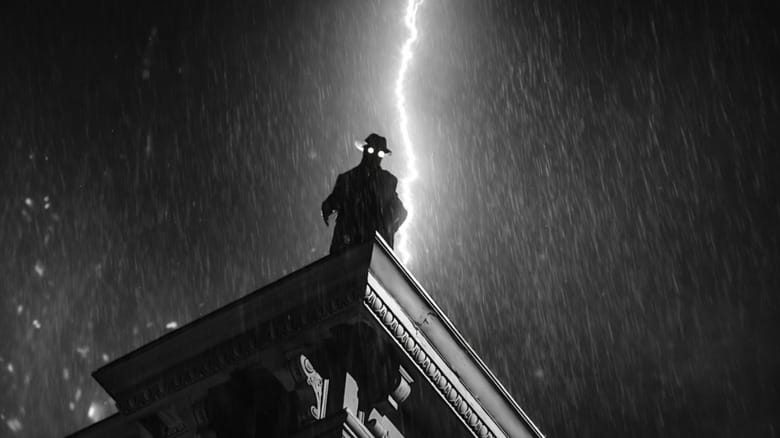
Sony and Amazon’s attempt to build a live-action corner of the Spider-Verse could have taken a dozen sanitized directions. Thankfully, it instead handed Nicolas Cage a fedora, a trench coat, and eight episodes of hard-boiled 1930s pulp, then let him run. “Spider-Noir” strips out nearly everything associated with modern superhero television — no shared-universe cameos, no bright primary colors unless you toggle out of its black-and-white viewing mode — in favor of a Depression-era detective story that only occasionally remembers it’s also about a man in a spider suit.
Cage plays Ben Reilly, a washed-up, wisecracking private investigator hiding from his own vigilante past until mobsters, a monster or two, and a femme fatale drag him back into the mask. Brendan Gleeson’s Irish crime boss Silvermane anchors the season as its central menace, with Jack Huston, Li Jun Li, and Lamorne Morris filling out a supporting cast built to bounce off of Cage’s pure commitment to the bit.
Cage’s “Spider-Noir” performance is the real draw here, as some of the underlying mystery is thinner than the mood and performances carrying it. Amazon canceled the series after a single season, citing the cost of its elaborate dual-format production, leaving Cage’s gumshoe web-slinger a one-and-done curiosity in Marvel’s ever-expanding multiverse, though “Spider-Noir” always felt like a one-off event than a show that would see long-term commitment.
The Vampire Lestat
AMC
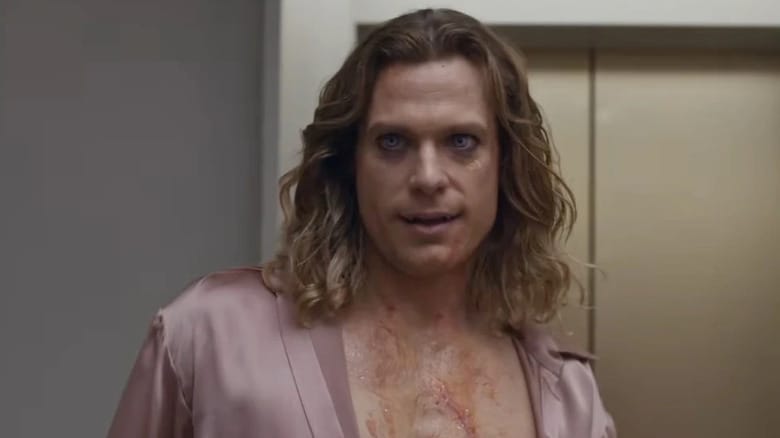
AMC’s “Interview with the Vampire” spent two seasons anchored in Louis de Pointe du Lac’s version of events, a betrayed man’s testimony to a journalist decades later. Season 3 rebrands itself after Anne Rice’s second novel and hands the mic to the man Louis spent two seasons accusing.
Sam Reid’s Lestat de Lioncourt, incensed by the “trashy bestseller” written about him, responds by forming a rock band and touring North America, dragging along Jacob Anderson’s Louis and Eric Bogosian’s Daniel Molloy, while flashbacks unfold his mortal life in 18th-century France. Jennifer Ehle joins as Lestat’s mother, Gabrielle, Christopher Heyerdahl as the ancient Marius, and Sheila Atim as Akasha. Showrunner Rolin Jones stages the season as glam-rock excess laid directly over unresolved trauma, with stadium-ready concert sequences alternating with the quieter, more wounded material that made the first two seasons work.
The risk is largely a delight. It’s a hard swerve for a show that gets a lot of mileage out of throwing its audience a little bit off track, and it rewards Rice completists by finally reaching the book most fans consider the saga’s best. “Interview With the Vampire” has always adapted Anne Rice’s work right, and “The Vampire Lestat” stays true to her vision of grand vampire melodrama.
Widow’s Bay
Apple TV
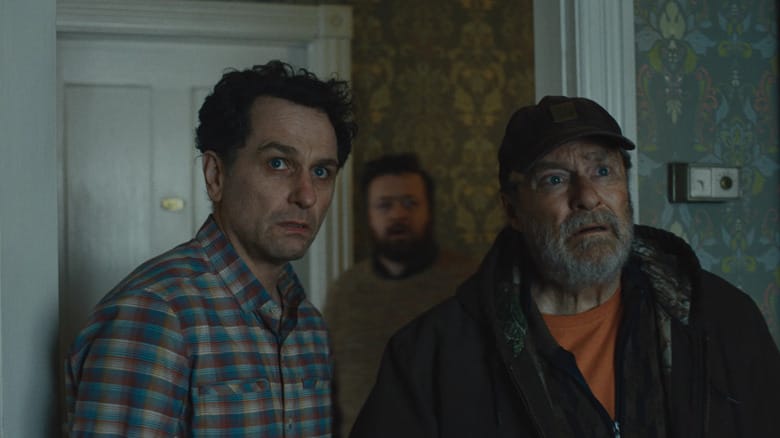
Katie Dippold’s “Widow’s Bay” is one of the year’s more odd success stories: a horror-comedy that plays both halves of that hyphenate completely straight, without self-consciously winking at itself, like “Parks and Rec” meets “Midnight Mass.” Directed and executive produced by Hiro Murai, it swaps the usual small-town chiller trappings for something stranger, building its unease as much from a score featuring bass flutes and conches as from its plotting.
Matthew Rhys stars as Tom Loftis, a skeptical mainland-turned-mayor determined to turn his adopted New England island into “the next Nantucket,” despite generations of locals warning him the place is cursed. As Loftis pushes ahead with a tourism campaign, centuries-old evils resurface in earnest, and Kate O’Flynn, Stephen Root, and Dale Dickey fill out a town whose superstitions prove to be grounded in fact rather than local eccentricities.
“Widow’s Bay” premiered to strong reviews in April and went on to sweep the Emmys, taking Outstanding Comedy Series along with acting wins for Rhys and O’Flynn. A second season is already in the works, but as a self-contained fable about civic denial dressed up as a ghost story, the first season stands entirely on its own.

Upgrade Your Movie Nights with Fire TV Stick 4K Plus
Stream movies, shows and entertainment in 4K with an easy upgrade for your TV.
View on Amazon